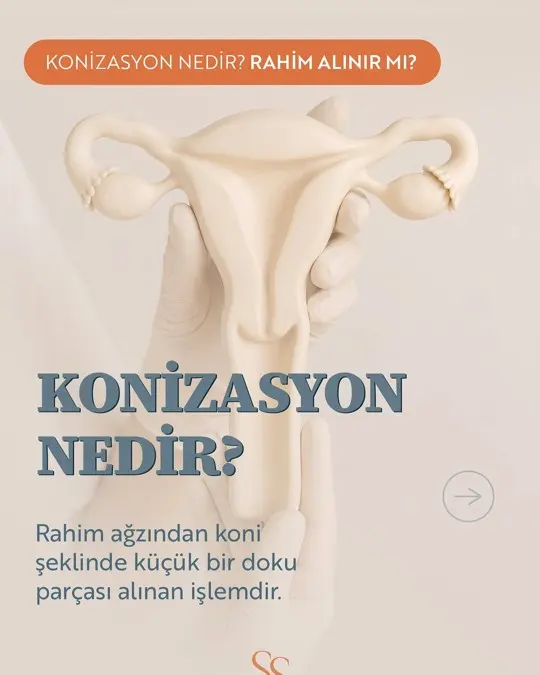
What is conization?
Conization is a procedure in which a small, cone-shaped piece of tissue is removed from the cervix. The most common misconception is that the uterus is removed in conization. In fact, conization does not mean removing the uterus. The uterus stays in place; only the diseased part of the cervix is removed. In most patients the chance of pregnancy is preserved.
The procedure is done for both diagnosis and treatment. The removed tissue is examined in pathology to assess the grade of the disease and whether it has been removed completely.
LEEP and cold knife conization
There are two common methods of conization.
- LEEP (loop electrosurgical excision procedure): Tissue is removed with a thin wire loop and electric current. It can usually be done in an outpatient or minor procedure setting under local anesthesia and takes a short time.
- Cold knife conization: Performed with a scalpel in the operating room, usually under anesthesia. It is preferred especially when a deeper or larger sample is needed and when a clear pathological assessment is wanted.
Which method is suitable is determined by the size and location of the lesion, your age and your wish for pregnancy.
When is it needed?
- When advanced cell change (CIN 2-3) is found on biopsy
- When colposcopy and biopsy results do not agree with each other
- With suspicious findings involving the inner part of the cervix (the endocervical canal)
- When there is suspicion of an early cancer on Pap smear or colposcopy findings, to clarify the diagnosis
Not every abnormal Pap smear result requires conization. Most mild changes are only monitored. Conization is a method chosen for treating changes of a certain grade.
What to expect after the procedure
Light bloody or watery discharge is expected for a few weeks. To allow the cervix to heal, the following is generally recommended:
- Avoiding sexual intercourse for about four to six weeks
- Not using tampons or douching
- Avoiding heavy lifting and strenuous exercise for a while
Healing time varies from person to person; your doctor will give you a plan specific to you. If you have heavy bleeding like a period, a fever or foul-smelling discharge, contact us without delay.
Possible risks
As with any procedure, conization has risks. Bleeding and infection can occur early on. In the long term, narrowing of the cervix can occur, although rarely. If a large amount of tissue is removed, the risk of preterm birth in later pregnancies may increase somewhat. For this reason, especially in patients planning pregnancy, the aim is to remove as little tissue as possible, and the decision is made by balancing these considerations.
Follow-up afterward
Once the pathology result is available, it is assessed whether the disease was removed completely (the surgical margin status). After the procedure, follow-up is carried out at set intervals with HPV testing, Pap smear and, if needed, colposcopy. The follow-up program is not the same for all patients. Keeping up with follow-up is important for catching any recurrence early.
The pathology report after conization
The removed tissue is examined by a pathologist. The report states the grade of the lesion and whether disease remains at the edges of the removed tissue (the surgical margin). If the margins are clear, regular monitoring is usually enough. If disease is seen at the margin, close follow-up at short intervals or, in some cases, an additional procedure may come into consideration.
Rarely, a more advanced lesion or an early-stage cancer may unexpectedly be found. In that case, the next step is planned from a gynecologic oncology perspective. The possibility of this is one of the reasons the procedure serves both diagnostic and treatment purposes.
Preparation before the procedure
Before conization, a full gynecologic examination is usually done and your current Pap smear/HPV and colposcopy results are reviewed. If there is any chance of pregnancy, it must be mentioned. Blood-thinning and other medications you use should be reported to your doctor.
- It is preferred to schedule it for a time when your period has just ended, not just started
- For cold knife conization, you need to follow fasting rules because of the anesthesia
- It may be helpful to bring someone with you on the day of the procedure
When should you contact your doctor?
In the period after the procedure, the following situations need urgent evaluation:
- Heavy bleeding that fills a pad in an hour
- High fever or chills
- Foul-smelling, discolored discharge
- Severe and increasing lower abdominal pain
These are rare, but it is important to seek care without delay if they occur. The first check-up is usually planned together with the pathology result.
Assoc. Prof. Dr. Sevtap Seyfettinoğlu plans conization with a tissue-sparing approach, especially in the diagnosis and treatment of precancerous lesions of the cervix. If conization is recommended, do not hesitate to ask why it is needed and to confirm that the uterus will stay in place.